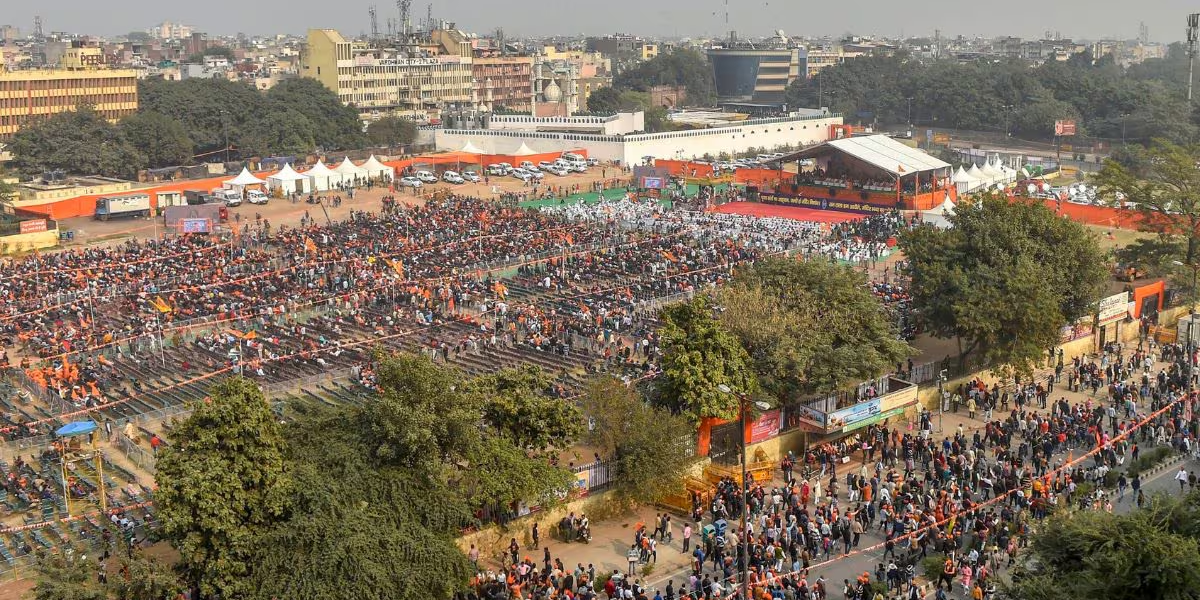
Ramlila Maidan in Delhi is not just an ordinary public ground but a significant landmark that has witnessed several historic moments in India’s political and social history. From major political rallies and anti-corruption movements to cultural programmes and public protests, the ground has played an important role in shaping the country’s democratic journey.
Spread across approximately 12 acres, Ramlila Maidan was originally a large lake before being converted into an open ground in the 1930s. It initially became famous for hosting traditional Ramlila celebrations, which were shifted here from the area behind the Red Fort. Gradually, it emerged as a major venue for political gatherings and public movements.
The ground has witnessed several memorable historical events. In 1961, Prime Minister Jawaharlal Nehru welcomed Queen Elizabeth II here. In 1963, legendary singer Lata Mangeshkar performed the patriotic song ‘Ae Mere Watan Ke Logon’ in Nehru’s presence. In 1965, Prime Minister Lal Bahadur Shastri gave his famous slogan ‘Jai Jawan, Jai Kisan’ at the venue.
Ramlila Maidan also holds an important place in India’s political history. In 1952, Dr Syama Prasad Mookerjee led the Kashmir Satyagraha here against the permit system for entering Jammu and Kashmir. On June 25, 1975, Jayaprakash Narayan addressed a massive rally against the Indira Gandhi government, delivering his famous slogan, ‘Singhasan Khali Karo Ki Janata Aati Hai.’ The Emergency was declared later that night.After the Emergency ended, the ground once again became a centre of political activity, hosting a major opposition rally in 1977 that contributed to the formation of India’s first non-Congress government at the Centre.
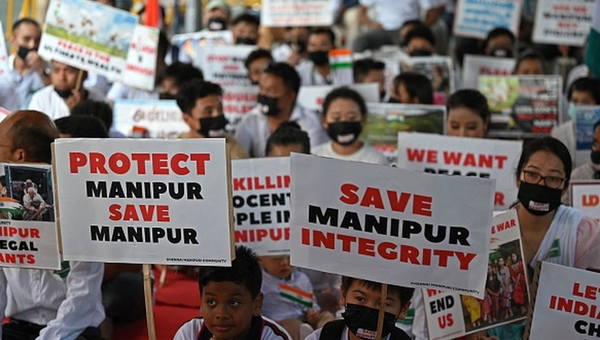
In 2011, Ramlila Maidan returned to the national spotlight during Anna Hazare’s anti-corruption movement. His hunger strike demanding a strong Lokpal law received widespread public support. The same year, Baba Ramdev also organised a protest at the venue demanding action against corruption and the return of black money.The ground has continued to host large-scale public demonstrations. In 2023, government employees gathered here demanding the restoration of the Old Pension Scheme. Farmers and labour organisations have also held protests over issues such as Minimum Support Price (MSP), loan waivers and labour laws.
From historic political speeches to nationwide movements, Ramlila Maidan has witnessed several defining chapters of India’s journey. Even today, it remains an important symbol of public participation, democratic expression and the country’s political history.