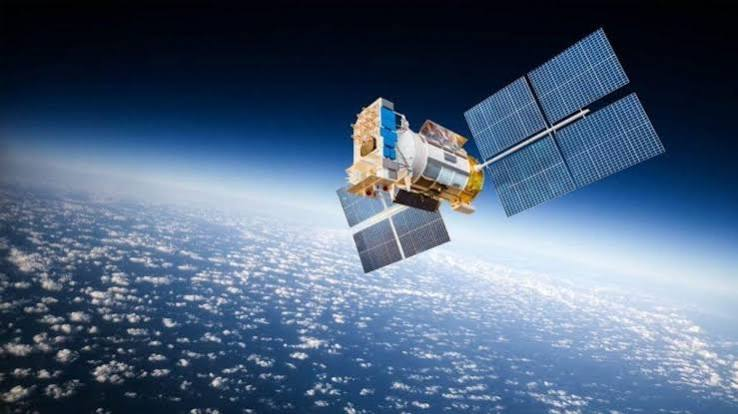
India’s space observatory AstroSat has made significant contributions to astronomy, helping scientists explore some of the universe’s most mysterious phenomena. Launched by the Indian Space Research Organisation (ISRO) on September 28, 2015, AstroSat is India’s first dedicated multi-wavelength space observatory.Unlike observatories that study celestial objects within a limited range of wavelengths, AstroSat can observe cosmic sources across ultraviolet, visible light and X-ray wavelengths. This capability allows scientists to examine different aspects of the same object and gain a deeper understanding of its behaviour.
Major Discoveries in Space
Over the years, AstroSat has helped scientists investigate black holes, neutron stars, distant galaxies and powerful stellar explosions. Its observations of the black hole system GRS 1915+105 have provided valuable information about rapid changes in X-ray emissions and the behaviour of matter surrounding black holes.Another notable achievement was the detection of extreme-ultraviolet light from a distant galaxy, AUDFs01, located approximately 9.3 billion light-years from Earth. The discovery demonstrated AstroSat’s ability to observe faint signals from the distant universe.
These findings have strengthened India’s contribution to international astronomical research and provided scientists with new data to investigate the evolution and behaviour of celestial objects.
How AstroSat Differs From NASA’s Observatories
AstroSat offers a distinctive advantage through its ability to observe cosmic objects simultaneously across multiple wavelength ranges using instruments aboard a single satellite. This helps researchers compare observations taken at the same time.NASA operates several advanced space observatories, including the Chandra X-ray Observatory, which specialises in studying the universe through X-rays. AstroSat and Chandra have different capabilities and scientific strengths, making their observations valuable for complementary research.
Rather than establishing that AstroSat is universally more accurate than NASA’s observatories, its achievements demonstrate India’s growing capabilities in space-based astronomy.
A Major Milestone for Indian Space Science
Initially designed for a minimum useful life of five years, AstroSat continued operating beyond its planned lifespan, completing 11 years in orbit in September 2026.Its continuing scientific contributions highlight the capabilities of Indian scientists and research institutions involved in developing and operating the mission.As researchers continue analysing its observations, AstroSat remains an important instrument for exploring black holes, distant galaxies and other unexplained phenomena, expanding humanity’s understanding of the universe.