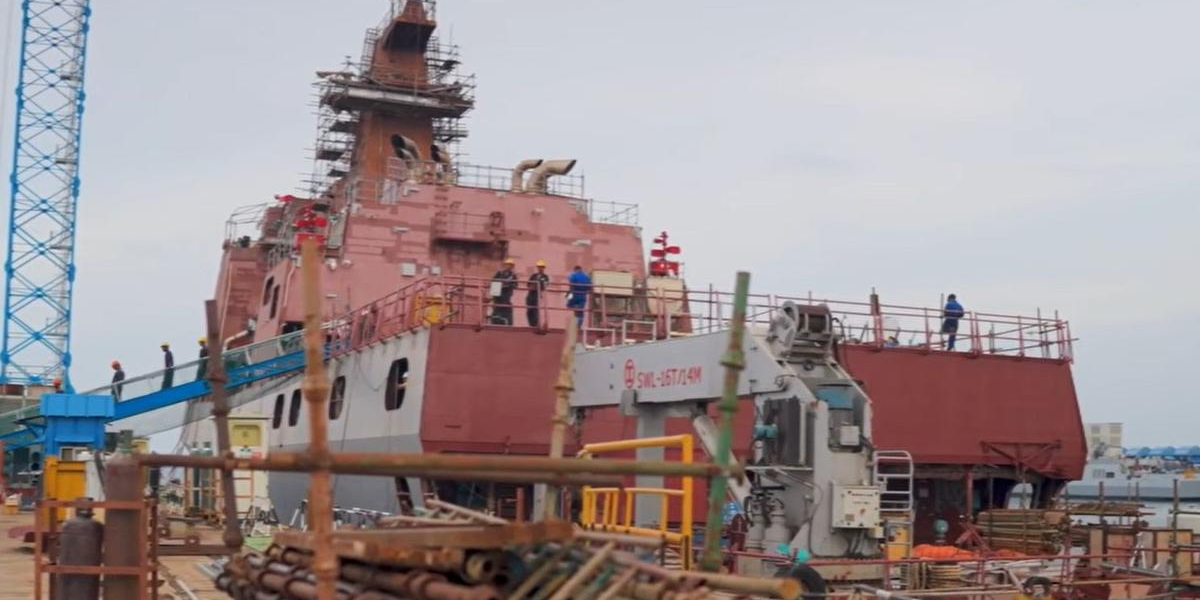
The Indian Navy commissioned INS Samarthak, an indigenously built multi-purpose vessel, at the naval base in Karwar, Karnataka, on October 16. Vice-President C. P. Radhakrishnan presided over the commissioning ceremony, marking a significant step in India’s efforts to strengthen domestic defence manufacturing.Built by Larsen & Toubro (L&T) at its Kattupalli shipyard in Tamil Nadu under the Make in India initiative, INS Samarthak is the first major warship constructed by an Indian private shipyard to join the Navy. The vessel has more than 75 per cent indigenous content, highlighting the growing role of Indian companies in developing advanced naval platforms.
Designed for Multiple Naval Operations
INS Samarthak has been developed to perform a wide range of operational and support duties. It will assist in maritime surveillance and patrolling, as well as testing and evaluating indigenous weapons, sensors and other advanced defence technologies.The vessel is also designed to support unmanned and autonomous systems, including their deployment and recovery. Its advanced positioning capabilities will help it maintain a stable position during specialised operations and naval trials.
Emergency Response and Rescue Capabilities
Apart from its defence-related functions, INS Samarthak is equipped to assist ships facing emergencies at sea. Its facilities include heavy-towing equipment, medical support and firefighting systems.The vessel can also participate in humanitarian assistance and disaster relief operations, as well as evacuation missions during emergencies. These capabilities make it a versatile asset for both operational and support requirements.
Boost to India’s Defence Self-Reliance
Chief of the Naval Staff Admiral Krishna Swaminathan highlighted the importance of the vessel in advancing India’s self-reliance in defence production. The project also reflects closer cooperation between the Indian Navy and the country’s private shipbuilding industry.INS Samarthak is part of India’s broader effort to develop advanced naval equipment and reduce dependence on foreign suppliers. Its commissioning represents an important milestone in indigenous shipbuilding and the modernisation of the Indian Navy.