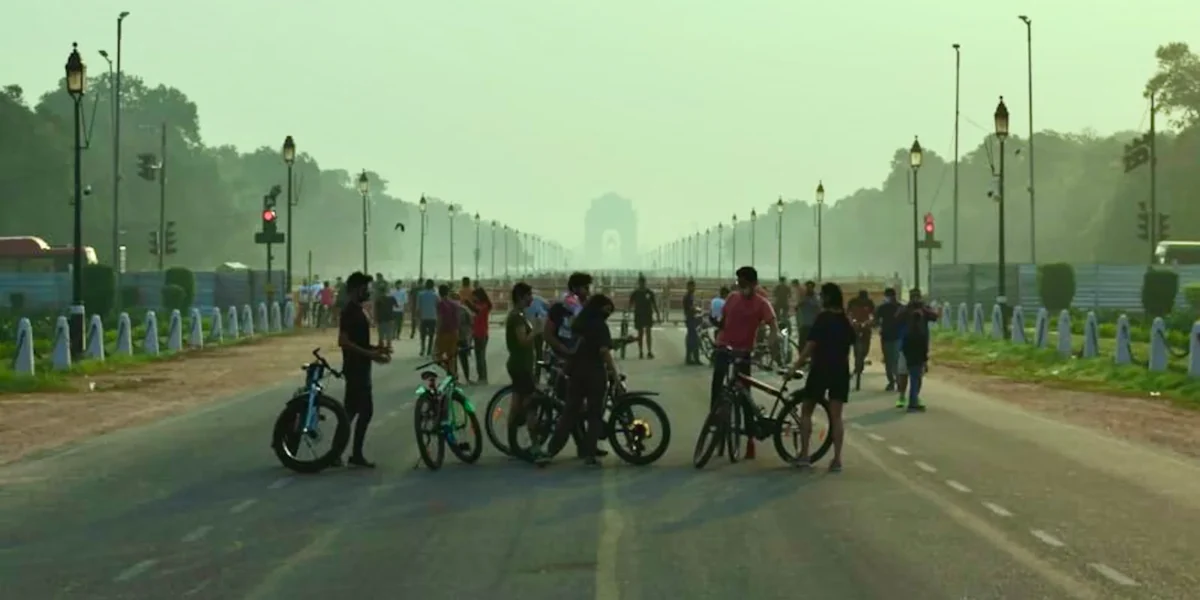
India’s latest clean-air assessment has brought a mixed picture for major cities. In the Swachh Vayu Sarvekshan 2026, Lucknow emerged as the top-performing city among those with populations above 10 lakh, scoring 198 out of 200 points, followed by Indore with 197 and Jabalpur with 195. Bhopal and Agra shared fourth place with 192 points, while Surat slipped to fifth position with 191 points. The survey, conducted under the National Clean Air Programme (NCAP), evaluates cities on several parameters, including road and construction dust, vehicular and industrial emissions, waste and biomass burning, solid-waste management, public awareness and PM10 levels. Lucknow’s strong performance has been attributed to measures such as mechanised road sweeping, promotion of electric vehicles, improved waste management and scientific disposal of legacy waste. The ranking highlights that clean-air performance depends not only on pollution levels but also on how effectively cities implement measures to control pollution at its source.
For Surat, the latest ranking marks a significant decline from its earlier performance. The city topped the million-plus category in 2024 with 194 points, while in 2025 it stood joint third despite improving its score to 196. In 2026, however, its score fell to 191, with challenges related to road dust, construction activity, traffic emissions, industrial pollution and waste management affecting its overall performance. Meanwhile, the survey also highlighted the wider air-pollution challenge facing India’s major urban centres, with Delhi and Mumbai ranking 30th and 37th respectively. Rourkela topped the 3–10 lakh population category, while Kalinga Nagar led among cities and towns with populations below three lakh. The overall message of Swachh Vayu Sarvekshan 2026 is clear: maintaining clean air requires sustained action rather than short-term campaigns. Effective dust control, cleaner transportation, scientific waste disposal, industrial emission management, better construction practices and public participation will be crucial for cities aiming to improve their clean-air rankings in the coming years.