For students preparing for higher education and future careers, the question is no longer simply what they will study, but how they will use what they learn. As technology reshapes industries, academic disciplines become increasingly interconnected and career pathways evolve, students need to develop capabilities that extend beyond conventional academic achievement.
This does not mean that academic readiness is becoming less important. A strong foundation in subjects, the ability to engage with challenging material and the discipline to pursue learning in depth remain essential. The opportunity for students lies in combining that foundation with the skills, curiosity and adaptability needed to navigate an increasingly complex world.
Academic Readiness Remains the Foundation
A strong understanding of subjects continues to provide the basis for success in higher education. Whether a student is interested in engineering, medicine, economics, the humanities or another field, subject knowledge enables more advanced learning and gives students the confidence to engage with complex ideas.
However, students also need to consider how they can apply that knowledge. Understanding a concept is important; being able to analyse a problem, evaluate different perspectives and use that understanding in an unfamiliar situation is what makes learning meaningful.
For example, a student interested in economics may benefit from understanding how data, technology and social sciences influence economic decision-making. A student pursuing the sciences may discover that communication and collaboration are just as important as technical knowledge when working on research or solving complex problems.
The ability to connect knowledge to real-world questions is therefore an important part of academic preparation. It can help students make more informed choices about their education and recognise the relevance of what they learn beyond the classroom.
The Skills That Help Students Navigate Change
As students move into higher education and eventually the workplace, they will encounter challenges that cannot always be addressed through subject knowledge alone. They may need to evaluate information, communicate an argument, work with people from different backgrounds or adapt to a new way of approaching a problem.
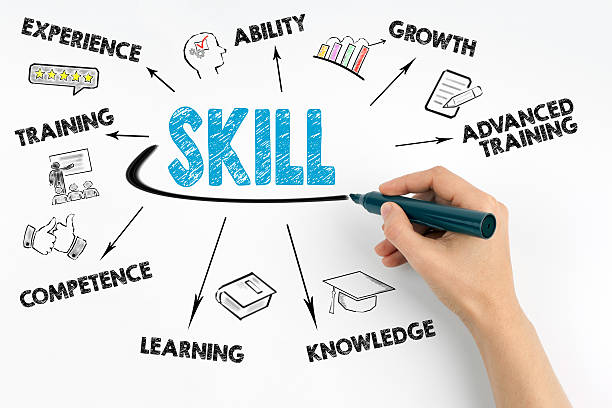
Critical thinking, communication, problem-solving, collaboration and adaptability are therefore important capabilities for students to develop alongside their academic learning.
Critical thinking helps students question assumptions, assess evidence and arrive at reasoned conclusions. Communication enables them to express ideas clearly and engage with different perspectives. Problem-solving encourages them to move from identifying a challenge to considering possible solutions. Collaboration helps them learn from others, while adaptability enables them to respond when circumstances change.
Digital fluency is also becoming an increasingly important part of this skill set. Students need to understand how to use technology effectively, but also how to evaluate information, recognise limitations and apply digital tools responsibly. These capabilities can support learning across subjects and help students approach new technologies with greater confidence.
Why Interdisciplinary Thinking Matters
Many of the questions students will encounter in higher education and their careers will not belong to a single discipline. Addressing issues such as climate change, public health, economic development or technological innovation requires different forms of knowledge and multiple perspectives.
For students, developing interdisciplinary thinking can begin with something as simple as exploring connections between subjects. A student interested in business may discover that understanding data, communication and technology can be just as important as developing knowledge of economics or finance. Similarly, a student interested in technology may find that their interests extend beyond computer science into areas such as design, business or the social sciences.
This approach can also encourage greater academic curiosity. Students may begin to ask questions that extend beyond the immediate requirements of a syllabus: How does this concept apply outside the classroom? What other subjects can help me understand it? What problems could I use this knowledge to solve?
These questions can help students develop a more purposeful relationship with learning and make more informed choices about their academic pathways.
AP Courses: Building Confidence Through Rigorous Learning
For students considering higher education, one of the most valuable steps they can take is to understand what college-level learning involves. The transition from school to university often requires students to engage with more complex material, work more independently and develop the ability to analyse information rather than simply recall it. Advanced Placement (AP) courses can help students begin developing these capabilities while they are still in school.
AP courses give students the opportunity to engage with college-level academic content in subjects they are interested in. Whether a student chooses AP Business with Personal Finance, AP Cybersecurity or AP Networking, the experience can encourage them to explore an area of learning in greater depth and understand the demands of more rigorous academic work.
For students, the value of AP extends beyond the opportunity to study an advanced subject. It can provide an experience of engaging with challenging material, developing analytical skills and building confidence in their ability to handle academic work that requires greater independence.
Academic readiness is not only about knowing more; it is also about learning how to think at a higher level. AP coursework can encourage students to analyse complex questions, evaluate evidence, develop arguments and apply concepts to unfamiliar situations. These are capabilities that can support learning across disciplines and help students approach university study with greater confidence.
Making Thoughtful Choices About AP
Students should approach AP courses strategically, based on their interests, academic strengths and future aspirations. The objective should not be to pursue the largest possible number of courses, but to make thoughtful choices that allow them to build depth in subjects they care about while developing the ability to manage challenging work.
For some students, this may mean exploring a subject they have not previously encountered. For others, it may mean extending their understanding of a subject they already enjoy. Both approaches can be valuable when they are guided by genuine interest and a willingness to learn.
AP can also help students explore subjects before making decisions about higher education. For example, students can use AP Cybersecurity to understand the principles of digital security, data protection and responsible technology use. AP Business with Personal Finance can help them develop practical knowledge of budgeting, saving, credit, investing and financial decision-making. AP Networking helps students develop the technical and professional career skills needed to build, manage, and secure computer networks. These courses allow students to connect academic learning with real-world applications while gaining a clearer understanding of the subjects and skills that may support their future education and career choices.
The value of these experiences lies not only in the knowledge students gain, but also in the opportunity to understand their own interests and capabilities more clearly.
AP Career Kickstart: Connecting Learning with Future Pathways
As students explore their academic interests, they also need opportunities to understand how those interests may connect to the world beyond school. AP Career Kickstart can support this process by helping students explore the relationship between academic learning and emerging career areas.
For many students, career planning begins with uncertainty. They may know which subjects they enjoy but may not yet understand how those interests could translate into future opportunities. Connecting academic learning with career exploration can help them see how knowledge and skills developed in school may be applied in different professional contexts.
This connection is particularly valuable for students who may not yet have a fixed career plan. Exposure to different career possibilities can help them understand how subjects and skills relate to professional opportunities, while encouraging them to think more broadly about the ways in which their interests could develop over time.
The objective is not to require students to make an early, definitive choice about their future. Rather, it is to help them make more informed academic decisions, understand the relevance of their learning and recognise that their interests can develop over time.
A Shared Responsibility for Future Readiness
Preparing students for a global future is not the responsibility of students alone. Schools and educators have an important role in creating learning environments that encourage curiosity, collaboration and the application of knowledge. Students, in turn, can take greater ownership of their learning by seeking opportunities to explore subjects, develop new skills and understand how their education connects to the wider world.
Ultimately, future readiness is not about predicting exactly which careers will exist or which skills will remain unchanged. It is about helping students develop the confidence and capabilities to keep learning, adapt to new circumstances and make informed choices.
A strong academic foundation, combined with critical thinking, communication, digital fluency and interdisciplinary learning, can help students prepare not just for their next educational step, but for a lifetime of learning and growth.