Music has its ultimate roots in India. Music shares an ancient, profound relationship with Hinduism. In sacred scriptures like the four Vedas, Smritis, Puranas, and the Bhagavad Gita, thousands of pathways are outlined to attain the four aims of life: Dharma, Artha, Kama and Moksha. Among these, music stands as a sublime path—a sacred vehicle for achieving ultimate liberation. Music bestows complete peace, harmony, and vitality upon our mind and intellect. India has nurtured a rich tradition of music since time immemorial. Almost every deity is associated with a unique musical instrument: Lord Vishnu holds the Shankha (conch), Lord Shiva commands the Damru, Sage Narada and Goddess Saraswati play the Veena and Lord Krishna plays the Bansuri (flute). The oldest foundational treatise on music is the Samaveda—a sacred compilation of melodic, chantable Vedic hymns. Musical treatises across the globe draw inspiration from the Samaveda. Indian classical music is built upon melodic structures known as Ragas, featuring over 630 distinct ragas. Instruments such as the Veena, Sarangi, Been, Mridanga, Dhol, Nagadu, Damru, Bell, Ghant, Manjira, Ghatam, Pungi, Dhank, Tabla, Shehnai, Sitar, Sarod, Pakhawaj, Santoor, Tanpura, and Jal Tarang were all invented in India.
The art of dance also originated in India. Dance forms worldwide evolved from ancient Indian classical roots. Dance sculptures discovered in the Harappan civilization prove that dance was already highly developed during that era. The Samaveda references dance alongside music. Sage Bharata’s Natya Shastra is recognized as the earliest and most authoritative treatise on dance and performing arts, revered as the Pancham Veda. According to the Natya Shastra, classical dance forms such as Bharatanatyam, Kuchipudi, Odissi, Kathathak, Kathakali, Yakshagana, Krishnanattam, Mohiniyattam and Manipuri developed in India. Additionally, vibrant folk and tribal dance traditions thrive across regions. Rajasthan’s famous Kalbelia dance has been inscribed on UNESCO’s Intangible Cultural Heritage list. Regional dances carry distinct expressions: the Chhau dance of Bengal, Bihar, and Odisha; Kerala’s Koodiyarum; Manipur’s Thang; Kashmir’s Bhand Nrutya; Assam’s Manipuri dance; Madhya Pradesh’s Rempha; Maharashtra’s Koli dance; Rajasthan’s Ghoomar and Terataali; Gujarat’s Raas-Garba; Punjab’s Bhangra; and the energetic tribal dances of the Dangs… all are celebrated globally.
Martial arts and self-defense systems first originated in India. Advanced weaponry and arms also had their beginnings here… During the eras of the Ramayana and Mahabharata, powerful weapons equivalent to modern nuclear arms existed—technologies that modern science has yet to fully comprehend. Erich von Däniken wrote in his bestseller book ‘Chariots of the Gods’ : “During the Mahabharata era, warriors possessed weapons capable of drying up the Earth for twelve years, as well as destructive arms that could destroy an unborn child in the womb.” Today, while India is among the world’s major defense importers, it holds a unique historic record: India has never invaded any foreign nation throughout its history.
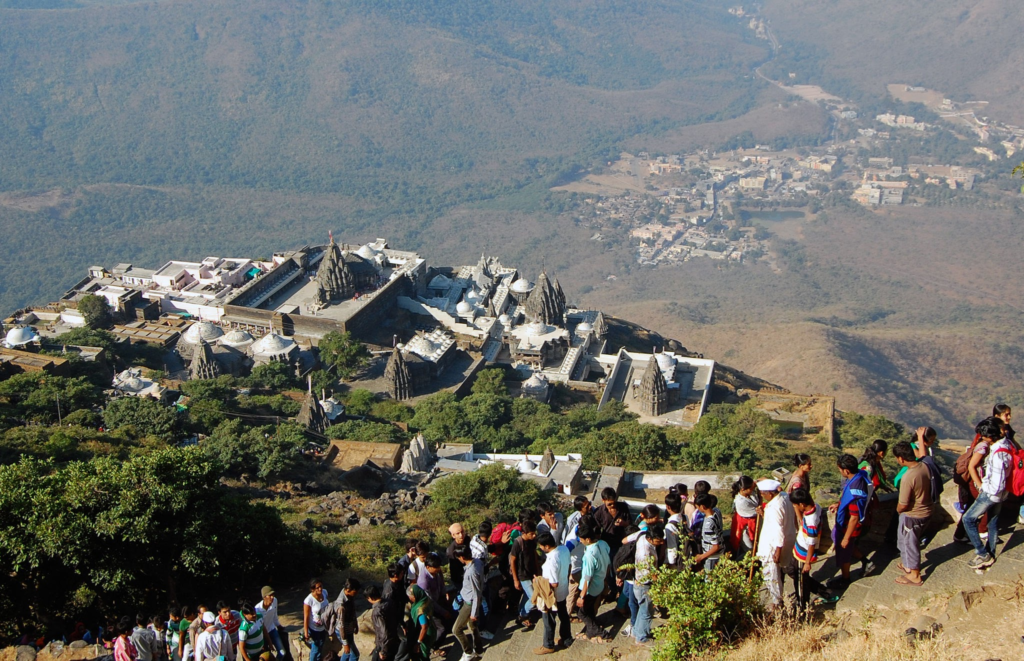
India is the most ancient land of agriculture and irrigation. On this fertile, bountiful land – Sujalam Sufalam, over twenty types of food grains were cultivated ten thousand years ago. Ancient Indians led the world in seasonal crop rotation. The earliest irrigation dams and water-harvesting reservoirs were designed in India. During the reign of Chandragupta Maurya, Governor Pushyagupta constructed the magnificent ‘Sudarshana Lake’ at the foothills of Mount Raivataka (Girnar) for water conservation and irrigation, later restored by King Rudradaman – I. Bridge engineering also originated in India, epitomized by the Ram Setu (Nala Setu). As recorded in the Valmiki Ramayana, this bridge was constructed across the ocean in just five days, spanning a length of 100 Yojanas and a width of 10 Yojanas. Built under the supervision of the engineer Nala with the dedicated labor of the Vanara army, it stands as a marvel of ancient engineering.
Shipbuilding and maritime navigation originated in India. The French traveler Balthazar Solvyns wrote in his book ‘Hindus’ : “In ancient times, the Hindus were leaders in the art of shipbuilding. Even today, they can teach Europe in this field. The British learned much from the Indians in this regard. Indian vessels display a remarkable blend of beauty and utility, standing as testament to the patience and craftsmanship of Indian artisans.” Marco Polo noted: “Ships in India were built with double planks fastened with iron nails, with the seams sealed using a special pitch. A single ship required a crew of 300 sailors and could carry up to six thousand bags of cargo, featuring comfortable cabins on top. When the outer bottom deteriorated, a new layer of planking was added, allowing a ship to be refurbished up to six times.” In ancient India, travel occurred by boats on rivers, ships on oceans, and aerial vehicles – Vimanas in the skies. Epics describe Lord Rama returning to Ayodhya aboard the Pushpak Vimana after the victory in Lanka. Sages, kings, and divine beings are described as possessing aerial transports.
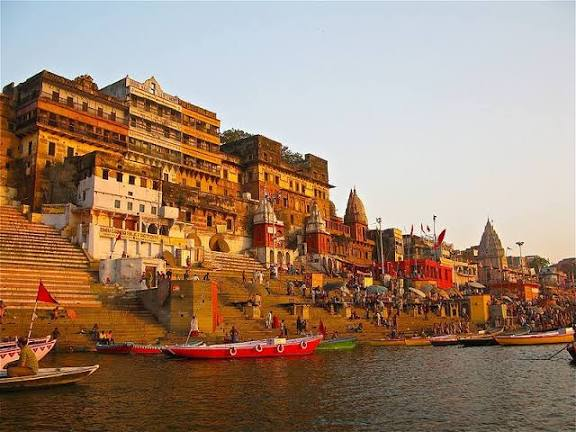
Urban planning and urbanization began in India. The world’s oldest continuously inhabited city is located here—Varanasi (Banaras/Kashi). Referenced in the Rigveda, historical and scriptural records trace Varanasi back over 10,000 years to the era of Sage Kashyapa. When Gautama Buddha visited Banaras, it was already renowned as an ancient city. Pataliputra, the capital of the Magadha Empire, stood among the largest metropolises of the ancient world. Mohenjo-Daro and Harappa along the Indus River valley represent some of the earliest planned urban centers discovered by archaeology.
Inventions and discoveries originating in India include Yoga, standardized rulers, shirt buttons, shampoo, sugar refined from sugarcane juice, the wheel, chariots, bullock carts, wireless radio concepts, ink, electricity principles, calendar systems, atomic theory (Anu theory), principles of commonwealth, and the discovery of water on the Moon. Diamond mining also originated in India. According to the Gemological Institute of America (GIA), until 1896, India was the world’s sole source of diamonds.
India is the cradle of democracy. Concepts of self-governance – Swaraj and republic – Ganatantra functioned here since the Vedic era. Thousands of years ago, elections in Vedic Janapadas utilized color-coded voting sticks, with neutral mediators declaring the outcome. Today, India is the world’s largest democracy by population, governed by the world’s longest written constitution. India currently stands as the world’s fifth-largest economy.
Rice and wheat serve as staple grains in India. Sweets like Rasgulla and Sandesh define West Bengal. Famous regional dishes include Tamil Nadu’s Pongal, Karnataka’s Bisi Bele Bath and Puliyogare, Maharashtra’s Puran Poli and Shrikhand, Gujarat’s Undhiyu, Rajasthan’s Dal Baati, Bihar’s Litti Chokha, Punjab’s Chole Bhature, and Delhi’s Chaat. India is the world’s largest producer of spices, historically led by cinnamon and black pepper. The world’s hottest chili, the Bhut Jolokia, is cultivated in India’s northeastern states. In ancient times, nearly a hundred foreign ships docked annually at ports in Kerala, Tamil Nadu, and Gujarat to trade for spices. Indian spices held such immense value that the 1st-century Greek text Periplus of the Erythraean Sea noted that half a kilogram of cinnamon bark cost the equivalent of an average Roman worker’s six-month salary. The Roman writer Pliny the Elder lamented that millions of Roman coins flowed to India annually to purchase spices. India has the world’s largest vegetarian population. Consequently, major global chains introduced custom menus here—Pizza Hut opened its first vegetarian restaurant in India, KFC added vegetarian options, and McDonald’s launched its first all-vegetarian outlet in India.
India is the world’s top exporter of bananas, the largest consumer/buyer of gold, the world’s leading producer of milk, the top producer and consumer of tea, and the number one producer and exporter of mangoes. India possesses one of the largest pools of scientists and engineers globally, the second-largest English-speaking population, and is one of the few nations to independently design and build supercomputers (alongside the US and Japan). India ranks second globally in software developers, is one of six spacefaring nations capable of building and launching satellites, ranks second in pharmaceutical manufacturing after China, and possesses the second-largest highway network in the world after the US.
After hearing such grand facts about India, someone might think that modern images of India only show poverty and underdevelopment… but write this down on the very first page of your mindbook: until the arrival of the British, India was the wealthiest country on Earth… It was India’s immense splendor and prosperity that had attracted Christopher Columbus… The Orientalist scholar Max Müller expressed: “If I were asked under what sky the human mind has most fully developed some of its choicest gifts, has most deeply pondered on the greatest problems of life, and has found solutions to some of them which well deserve the attention even of those who have studied Greek and Roman philosophy, I should point to India. And if I were to ask myself from what literature we, here in Europe, we who have been nurtured almost exclusively on the thoughts of Greeks and Romans, and of one Semitic race, the Jewish, may draw that corrective which is most wanted in order to make our inner life more perfect, more comprehensive, more universal, in fact more truly human, again I should point to India. This is the majesty of India… this is its matchless identity… this is the incomparable personality of India…” Saying this, Ritudhwaj concluded the narration of India’s greatness.
ShreeDhar asked with wonder and reverence: “Oh! India is so grand… but what lies at the foundation of this vast, glorious nation? What is the secret behind its grandeur and divinity?”
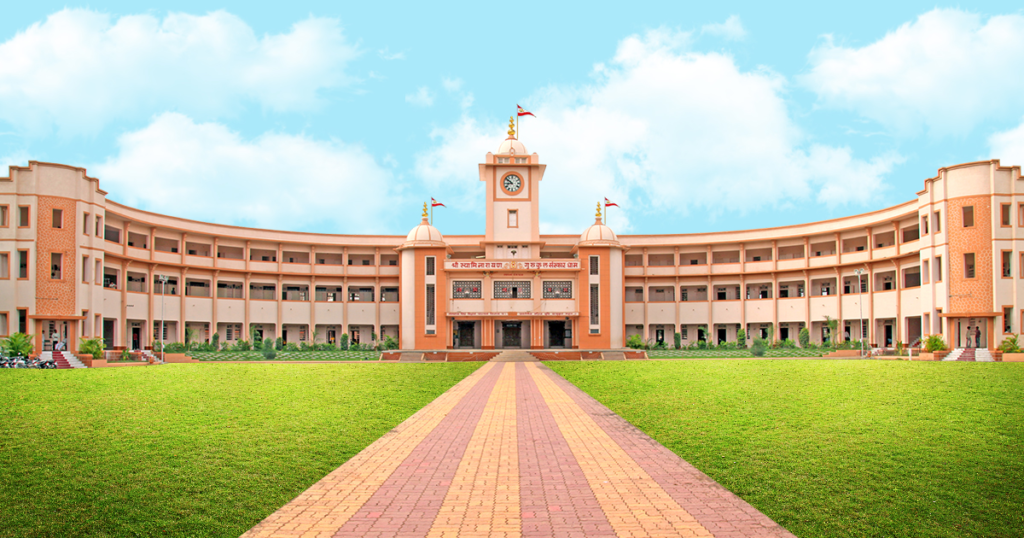
Ritudhwaj replied: “The foundation lies in its Guru-Shishya tradition—the Gurukul tradition. Through this Gurukul system, the ancient seers (Rishis) of India molded ideal human beings, created a character-driven society, and filled India with splendor and divine radiance. The contribution of the Gurukul to India’s heritage is unparalleled.”
ShreeDhar asked: “What is this Gurukul tradition, and what exactly is a Gurukul? O Divine Soul Ritudhwaj… I wish to learn about it as well.”
Ritudhwaj answered: “The Gurukul tradition is as grand as India itself. If you wish to learn about it, the book titled ‘Gurukulam’ was recently made available on the website of Shree Swaminarayan Gurukul Rajkot Sansthan – SGRS. It offers deep insights into the Gurukul heritage.”
With deep reverence to glorious India and the divine Gurukul tradition, the video call between ShreeDhar and Ritudhwaj concluded. ShreeDhar immediately visited the SGRS website and began reading Gurukulam online directly from Heaven. So come, let us also join this journey of reading…