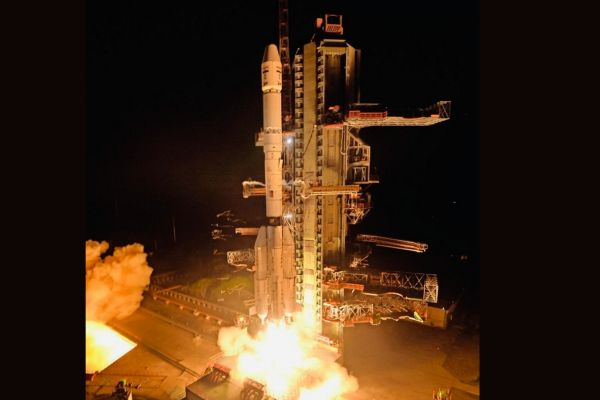
The Indian Space Research Organisation (ISRO) has launched its NVS-03 navigation satellite to strengthen India’s indigenous navigation system, NavIC (Navigation with Indian Constellation). The satellite was launched from the Satish Dhawan Space Centre in Sriharikota using the GSLV-F18 rocket.The mission is considered important as India’s NavIC system has been facing a shortage of operational satellites, affecting its positioning capabilities.
What is NavIC?
NavIC is India’s own regional navigation satellite system, similar to the US-based GPS. It provides accurate positioning, navigation and timing services across India and approximately 1,500 km beyond its borders.The system is used in road transportation, maritime navigation, disaster management and defence operations. It also reduces India’s dependence on foreign navigation systems.
What Makes NVS-03 Special?
NVS-03 is the third satellite in the second-generation NVS series. It carries both imported atomic clocks and an indigenous atomic clock. It also supports the L1 navigation signal alongside the existing L5 and S-band signals, which is expected to improve NavIC’s performance and usability.
Why Is This Launch Important?
According to information presented in Parliament, only three NavIC satellites were providing positioning and timing services, while at least four satellites are required for accurate positioning.An earlier satellite, NVS-02, launched in January 2025, could not reach its intended orbit due to a propulsion system malfunction.With NVS-03, ISRO aims to strengthen India’s independent navigation infrastructure. The space agency is also working on the upcoming NVS-04 and NVS-05 satellites.