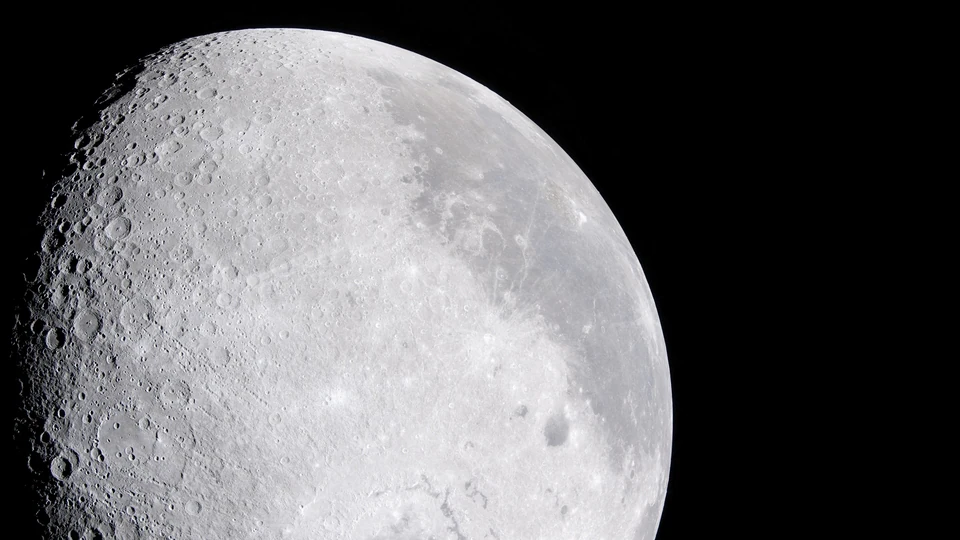
US President Donald Trump recently posted “THE MOON IS OURS” on Truth Social, alongside an image of the lunar surface featuring the American flag. The post has sparked fresh discussion about who can legally claim territory on the Moon and whether countries or private companies can exploit its natural resources.
Under the 1967 Outer Space Treaty, however, the Moon cannot legally become the territory of any country. Article II states that outer space, including the Moon and other celestial bodies, cannot be claimed through national sovereignty, occupation or any other means. This means that planting an American flag, establishing a base or operating on a particular part of the lunar surface would not give the United States ownership of that territory.
Can countries mine the Moon?
This is where the legal debate becomes more complicated. The Outer Space Treaty prohibits countries from claiming the Moon itself, but it does not provide a detailed framework for commercial ownership of resources extracted from the lunar surface. As countries and private companies prepare for more ambitious lunar missions, questions over water ice, minerals and other resources are becoming increasingly important.
The United States has also developed the Artemis Accords, which address principles for peaceful exploration and the use of space resources. Supporters argue that extracting and using lunar resources can be consistent with international space law, provided it does not amount to a territorial claim. Other countries and legal experts continue to debate how far such resource rights can extend.
Why the Moon is becoming strategically important
The debate comes as the Moon is moving back to the centre of global space competition. The US, China and other space powers are developing programmes aimed at establishing a sustained human and technological presence on the lunar surface. Areas around the lunar south pole are particularly important because scientists believe permanently shadowed regions may contain water ice, which could potentially support future missions.
So, while Trump’s statement has drawn attention, a social-media post does not change the Moon’s legal status. Under the existing international treaty framework, no country can simply declare the Moon its territory. The bigger question for the coming years may be who gets access to lunar resources—and under what international rules.