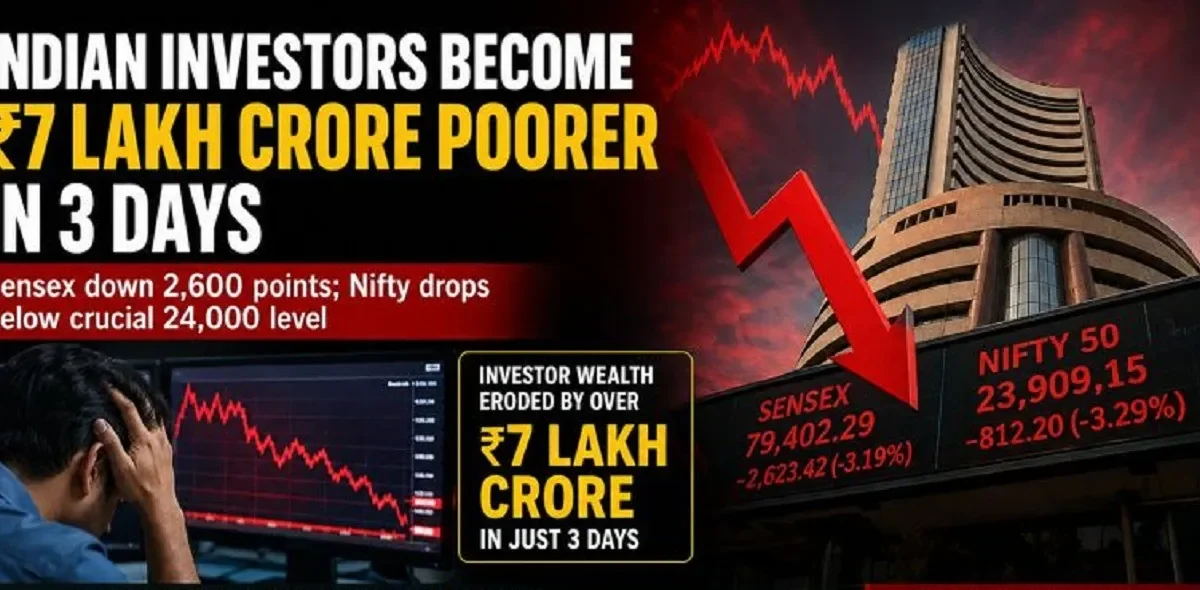
Investors Hit Hard as FIIs Sell Heavily, Dragging BSE Sensex and Nifty 50 Lower
Indian equity markets witnessed a sharp downturn over three consecutive trading sessions from April 22 to April 24, 2026, erasing more than Rs.7 lakh crore of investor wealth. The benchmark indices, BSE Sensex and Nifty 50, came under heavy selling pressure, with the Sensex plunging over 2,600 points and the Nifty slipping below the crucial 24,000 mark. The decline has significantly impacted retail investors, many of whom saw the value of their investments drop sharply within a short span.
Multiple factors contributed to the market fall. One of the primary triggers was rising geopolitical tensions in West Asia involving Iran, which created uncertainty despite talks of a ceasefire with the United States. This uncertainty made global investors cautious, leading to a risk-off sentiment across markets.
Another major reason was disappointing quarterly earnings from IT giants such as Infosys and HCL Technologies. As IT stocks hold significant weight in the indices, their weak performance dragged the broader market lower. Investors reacted negatively to subdued growth outlooks and margin pressures in the sector.
Rising crude oil prices further worsened sentiment. Brent Crude Oil surged past $105 per barrel during this period, up from around $90 earlier in the month. For a country like India, which relies heavily on oil imports, higher crude prices increase inflationary pressure, raise transportation and manufacturing costs, and hurt corporate profitability. This also limits the ability of the Reserve Bank of India to cut interest rates, which is crucial for economic growth.
Adding to the pressure was aggressive selling by Foreign Institutional Investors (FIIs). In April alone, FIIs sold shares worth over RS.1.14 lakh crore, with significant outflows during these three days. The heavy selling created an imbalance in the market, with more sellers than buyers, accelerating the decline in stock prices.
Overall, the combination of global uncertainty, weak corporate earnings, rising inflation concerns, and sustained foreign outflows led to one of the sharpest short-term market corrections in recent times. Market experts advise investors to remain cautious in the near term while focusing on long-term fundamentals as volatility is expected to continue.