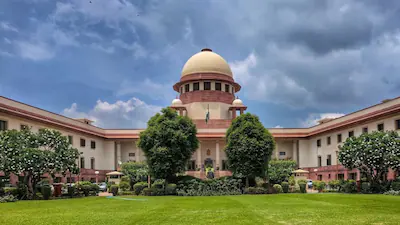
The Supreme Court of India has questioned the relevance of laws that penalise people for having more than two children, observing that changing demographic trends have weakened the argument behind such restrictions. The court noted that India’s total fertility rate has declined from 3 in 2003 to 1.9 currently, falling below the replacement level of 2.1. It also expressed concern that such laws could interfere with reproductive autonomy, which is protected under Article 21 of the Constitution.
The observations came while hearing a petition filed by Mangala Bhimrao Ingle, a former sarpanch of Kakoda Gram Panchayat in Maharashtra, who was disqualified from her post after allegations that she had a third child. Her disqualification was upheld by the Bombay High Court under the Maharashtra Village Panchayats Act, 1959. A Supreme Court bench comprising Justices P.S. Narasimha and Alok Aradhe questioned whether having more than two children should continue to be a ground for disqualification from elected local body positions.
The Supreme Court stayed the proceedings against Ingle and referred the larger constitutional question to a larger bench for reconsideration. The court observed that such restrictions could prevent citizens from participating in democratic institutions for reasons unrelated to their ability to hold public office. The matter could have wider implications for states that continue to enforce similar two-child eligibility rules for local body elections.