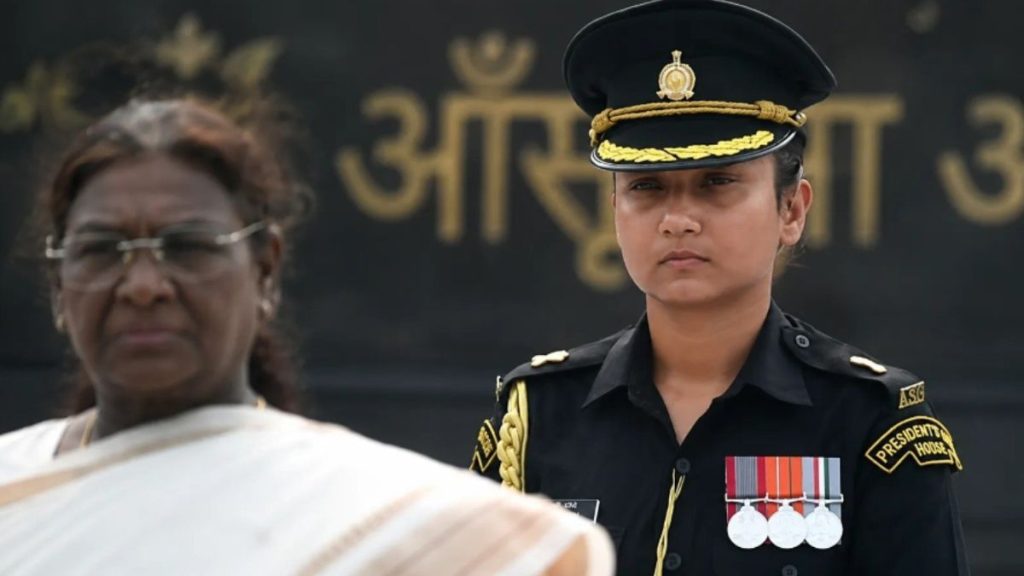
Major Navya Shekhawat has created a milestone by becoming the first woman officer from the Indian Army to serve as Aide-de-Camp (ADC) to President Droupadi Murmu. Her appointment at Rashtrapati Bhavan marks another important development in the growing participation of women in the Indian armed forces.
Major Shekhawat is also the second woman officer overall to serve as the President’s ADC. In 2025, Lieutenant Commander Yashasvi Solanki of the Indian Navy became the first woman officer to hold the position.
From CDS Examination to the Army
Major Navya Shekhawat joined the Indian Army after clearing the UPSC Combined Defence Services (CDS) examination. She was selected for the Women Non-Technical course at the Officers Training Academy (OTA), Chennai.She was commissioned into the Army Service Corps in 2021. According to reports, she reached the rank of Major within around five years of joining the Army. Her journey from the CDS examination to Rashtrapati Bhavan highlights the career path available to women officers in the armed forces.
What Does a President’s ADC Do?
An Aide-de-Camp is a military officer assigned to assist the President during official engagements and ceremonial functions.The role is not limited to accompanying the President at public events. ADCs are involved in official coordination, communication and military and ceremonial protocol. They accompany the President during important functions and engagements at Rashtrapati Bhavan and elsewhere.Traditionally, the President has five ADCs — three from the Indian Army, one from the Indian Navy and one from the Indian Air Force.
A New Milestone for Women Officers
Major Navya Shekhawat’s appointment adds another milestone to the expanding role of women in India’s armed forces. Her position also brings greater visibility to women officers serving in important military assignments connected with the country’s highest constitutional office.Her journey from the CDS examination and military training to serving alongside the President at official engagements has attracted attention as an example of the changing opportunities for women in the Indian Army.